


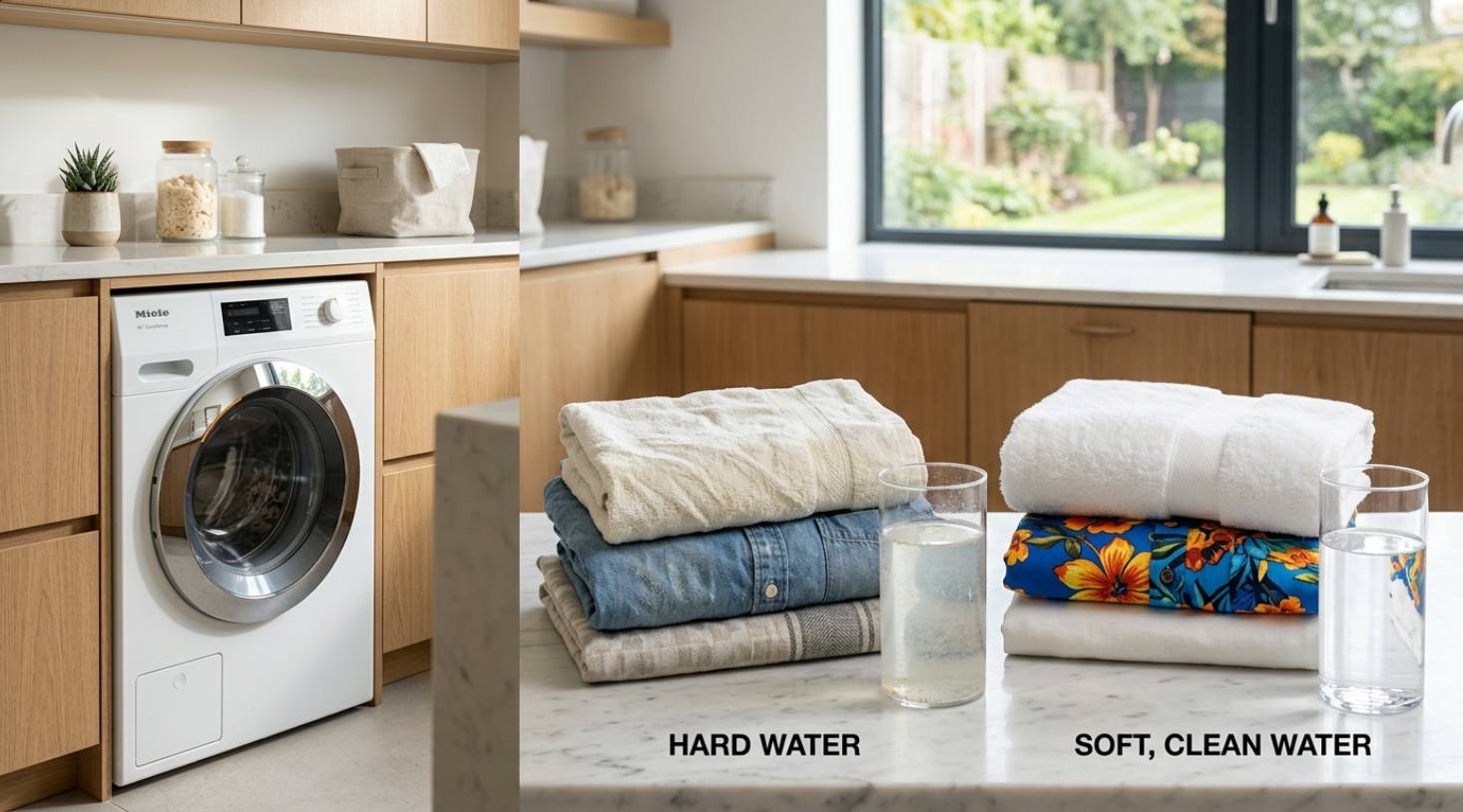
Most people blame detergents, washing temperatures, or machine settings when their clothes start looking dull, stiff, or worn out too quickly. But there’s a hidden factor many overlook: water quality. The type of water that flows into your washing machine plays a direct role in how long your fabrics last, how bright your colors stay, and even how effective your detergent can be.
Understanding water quality isn’t just a technical detail—it’s a crucial part of laundry care that affects every wash cycle.
The Science Behind Hard and Soft Water
Water quality mainly varies according to mineral concentration, especially calcium and magnesium.
- Hard water has high mineral content
- Soft water contains fewer minerals
These minerals interact with detergent, fabric fibers, and even the washing machine itself. Over time, this interaction can cause noticeable and sometimes irreversible fabric wear.
Every city’s water supply is different, and even within the same region, water hardness can vary depending on pipes, filtration systems, and municipal treatments.
How Hard Water Contributes to Fabric Wear
1. Mineral Buildup Weakens Fibers
Hard water leaves microscopic mineral deposits on fabric. Over time, these particles:
- Create a rough texture
- Cause fibers to break down faster
- Reduce softness and flexibility
- Make clothing feel older than it is
This is especially noticeable on towels, cotton shirts, and delicate fabrics.
2. Colors Fade More Quickly
Minerals interfere with how dye binds to fabric. When mineral accumulation builds up:
- Colors wash out faster
- Whites turn yellow or gray
- Patterns become duller over time
The effect is gradual but unmistakable after dozens of wash cycles.
3. More Detergent, Worse Results
Because minerals reduce detergent efficiency, people often compensate by adding:
- Extra detergent
- More fabric softener
- Stronger cleaning agents
But this can make the problem worse, leaving residue that attracts dirt faster and damages fibers.
Soft Water: A Friend to Fabrics
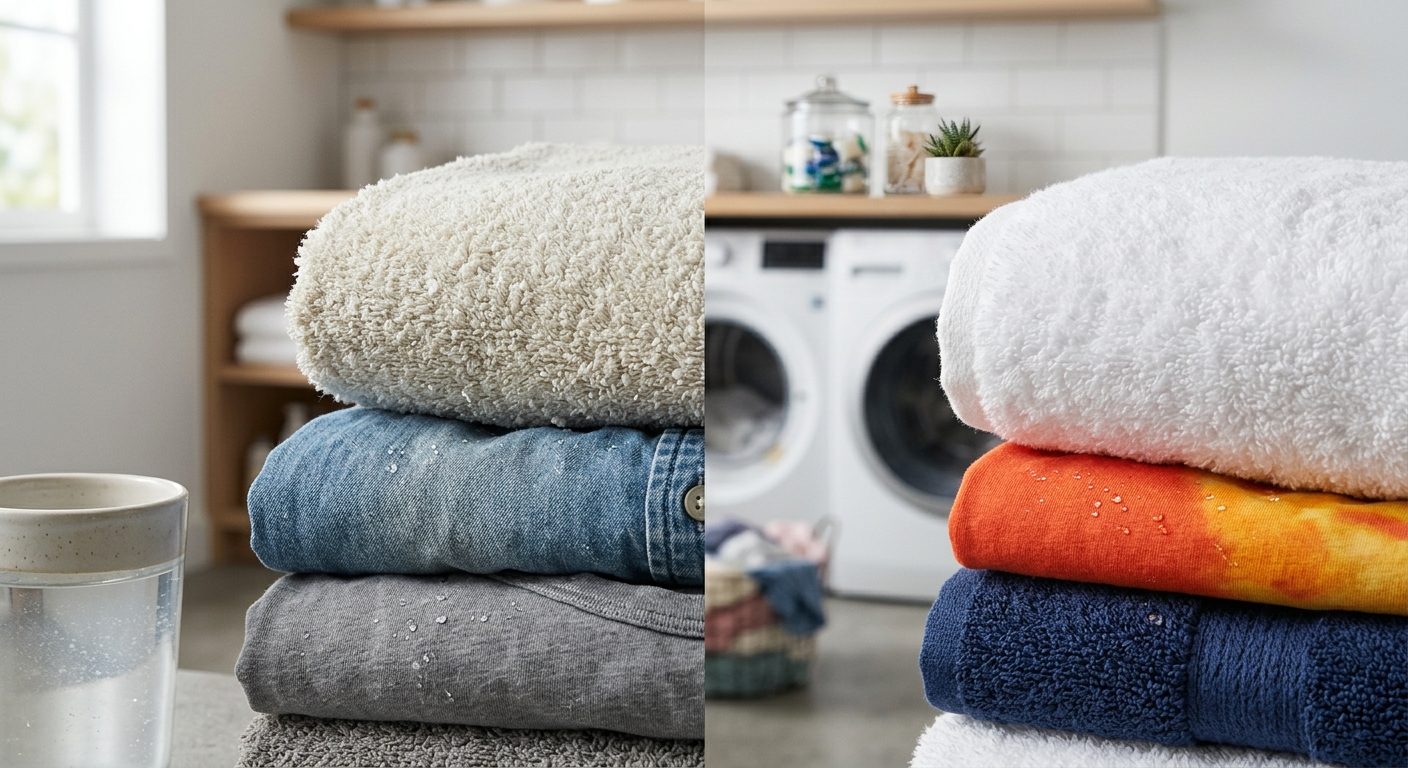
Soft water doesn’t deposit minerals on fabric, allowing garments to:
- Stay bright longer
- Feel softer and lighter
- Maintain elasticity
- Resist wear and pilling
Detergent also dissolves more easily in soft water, meaning you can use less product with better results. In many cases, switching to soft water significantly extends the lifespan of clothes.
Not Just Fabrics: Water Quality Affects Your Machine Too
Water quality doesn’t only damage clothes—it also impacts washing machine performance.
Hard water can cause:
- Limescale buildup inside pipes and drums
- Reduced heating efficiency
- Clogged detergent dispensers
- Shortened machine lifespan
This buildup also affects how evenly water flows, resulting in inconsistent cleaning and more repeated wash cycles, which further wears down fabrics.
How Contaminants Affect Laundry Beyond Minerals
Water quality issues also include:
1. Chlorine
Common in treated tap water, chlorine can:
- Fade fabrics
- Weaken elastic materials
- Cause discoloration in whites and light colors
2. Iron and Rust Particles
Older pipelines may contribute:
- Orange or brown stains
- Spotting that is difficult to remove
- Long-term damage to light textiles
3. Sediment and Micro-Particles
These add friction, acting like tiny abrasives on delicate fabrics.
Signs Your Water Is Damaging Your Laundry
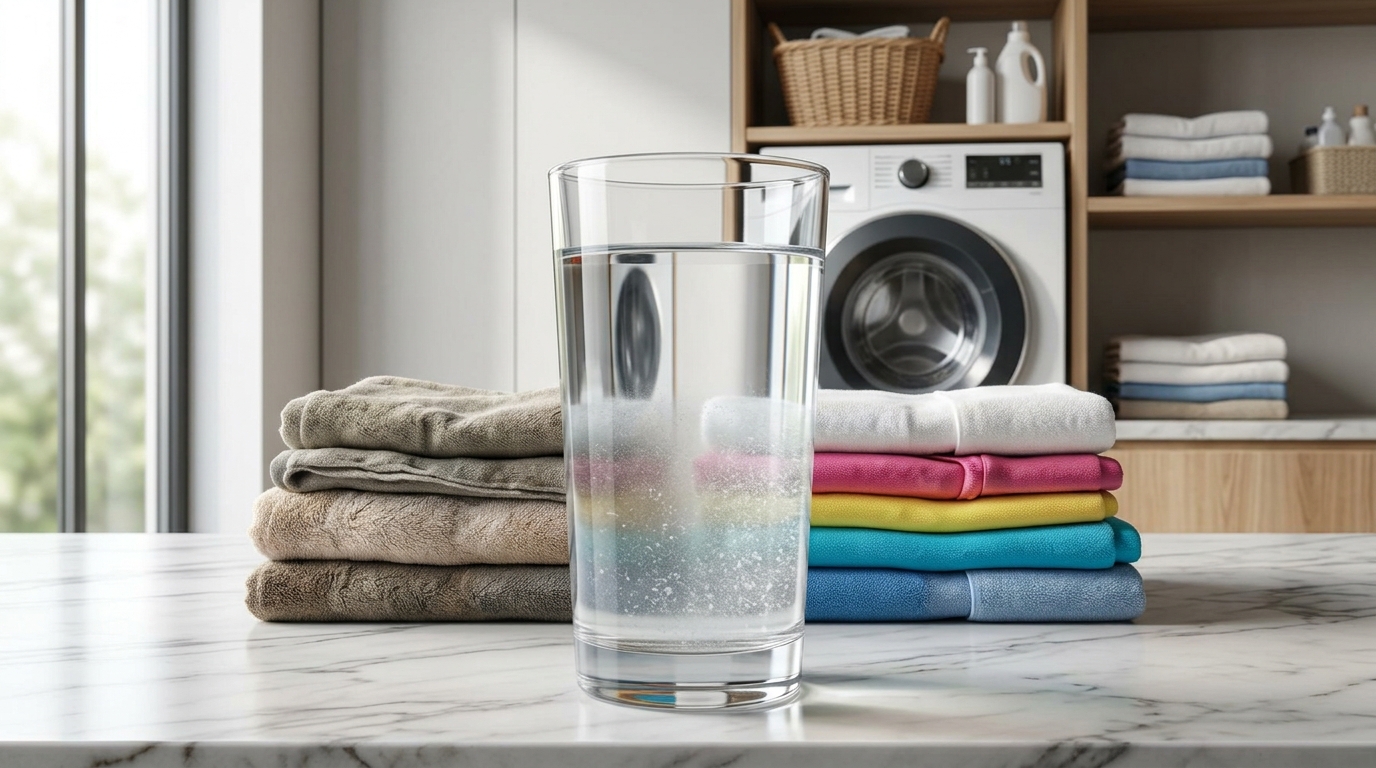
You may be experiencing water-related fabric wear if you notice:
- Clothes feel stiff even with softener
- Colors fade within a few months
- Whites look yellow or gray
- Towels lose absorbency
- Fabrics pill easily
- Detergent doesn’t dissolve fully
- The washing machine accumulates residue or scale
These symptoms signal it may be time to check your water quality.
Practical Ways to Protect Your Fabrics
The good news: simple adjustments can dramatically improve fabric longevity.
1. Use a Water Softener or Filter
Installing a softening system or point-of-entry filter reduces mineral content and prevents buildup.
2. Adjust Detergent Amounts
In hard water, using detergents formulated for mineral-heavy water helps maintain cleaning efficiency.
3. Add Fabric Conditioners Wisely
Conditioners help reduce friction but shouldn’t be relied on as a primary fix.
4. Lower Wash Temperatures
Hot water reacts more strongly with minerals, accelerating wear.
5. Clean Your Machine Regularly
Descaling prevents mineral buildup that can redeposit onto clothing.
Conclusion
Water quality is one of the most overlooked factors in laundry care, yet it has a major impact on fabric health, color vibrancy, and garment longevity. Whether you’re dealing with hard water minerals, chlorine, or sediment, understanding what’s in your water—and how to manage it—helps ensure your wardrobe stays fresh, soft, and vibrant for far longer.
When you pay attention to the water behind every wash cycle, your clothes, your washing machine, and your budget will all benefit.
